TabelaTR — 1,068 Programmatic Pages for Turkey’s Signage Industry
44 sectors × 13 materials = a programmatic SEO matrix covering every signage use case in Turkey
The Brief
- Goal
- Build the authoritative online hub for Turkey’s signage industry — a resource covering every material, sector, and province.
- Audience
- Turkish businesses needing signage, sign manufacturers, interior designers.
- Niche
- Turkish signage industry — highly fragmented, no dominant online authority.
The Approach
Programmatic page matrix: 44 industry sectors × 13 signage materials = 572 combination pages; plus 81-province variations for local SEO.
Wikidata entity: Q138652526 registered for the signage hub itself — establishing TabelaTR as a citable entity, not just a content site.
81-province maps integration: Google Maps embeds for province-specific signage queries (“istanbul tabela”, “ankara tabela”).
Schema.org LocalBusiness and Product markup at scale.
Tech Stack
Frontend
Next.js App Router
Hosting
Vercel
Styling
Tailwind CSS
Data
Structured content database (sector / material / province combinations)
SEO
Programmatic structured data, Google Maps integration, Wikidata Q138652526
Monetization
Lead generation for signage manufacturers
The Build
The programmatic matrix strategy rested on a single insight: Turkish signage queries follow a predictable pattern — “[material] tabela + [sector]” or “[city] tabela”. A 44×13 matrix of sector-by-material combination pages, plus 81 province variations, covers the entire demand space without writing each page manually. The result is 1,068+ indexable pages derived from a structured data layer rather than individual content effort.
The Wikidata entity registration — before the site had significant traffic — gave AI models a structured node to associate with “Turkish signage information.” Registering Q138652526 early is the same strategy used at modernwebseo.com: entity recognition compounds over time, so earlier registration means more value accumulated by the time AI models start surfacing results.
Turkish local search is highly geography-sensitive. Embedding province-specific Google Maps and including city names in structured data meant local searchers landed on relevant province pages instead of the homepage. Each of Turkey’s 81 provinces got a dedicated entry point with LocalBusiness schema tied to that geographic area, which is materially different from adding a city name to a generic page.
The sector depth challenge was real: 44 sectors means some (healthcare signage, retail signage) have rich, well-understood content while others (mining industry signage) are thin by nature. The initial launch treated all 44 equally. In v2, prioritizing depth in the top 10 sectors by search volume — publishing detailed guides, product specifications, and case examples for those sectors first — improved quality signals across the site before expanding the long-tail.
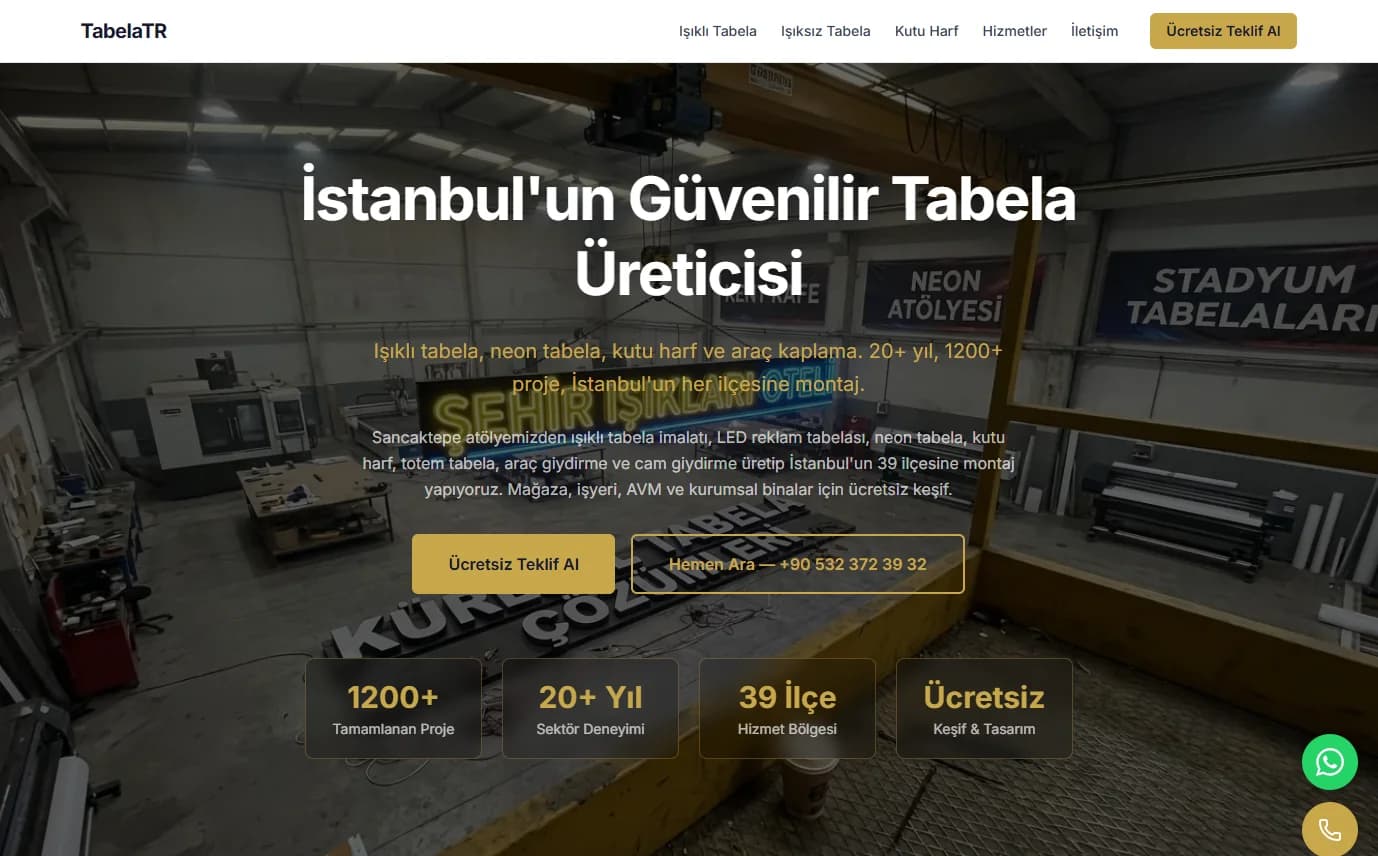
Screenshots


Results
What I’d Do Differently
“I’d prioritize the 44-sector depth before launching all 44 simultaneously. Thin pages in low-traffic sectors diluted the site’s quality signals during the critical first-year indexation phase.”
“The province variation pages needed unique introductory paragraphs — identical templates with only the city name swapped were deprioritized by Google faster than expected.”
See it live
Explore the programmatic matrix, province pages, and sector depth firsthand.