ModernWebSEO — Positioning a Solo SEO Studio for the AI-Search Era
From freelancer to Venture Builder: a $499 audit service with a Wikidata entity and 11-platform presence
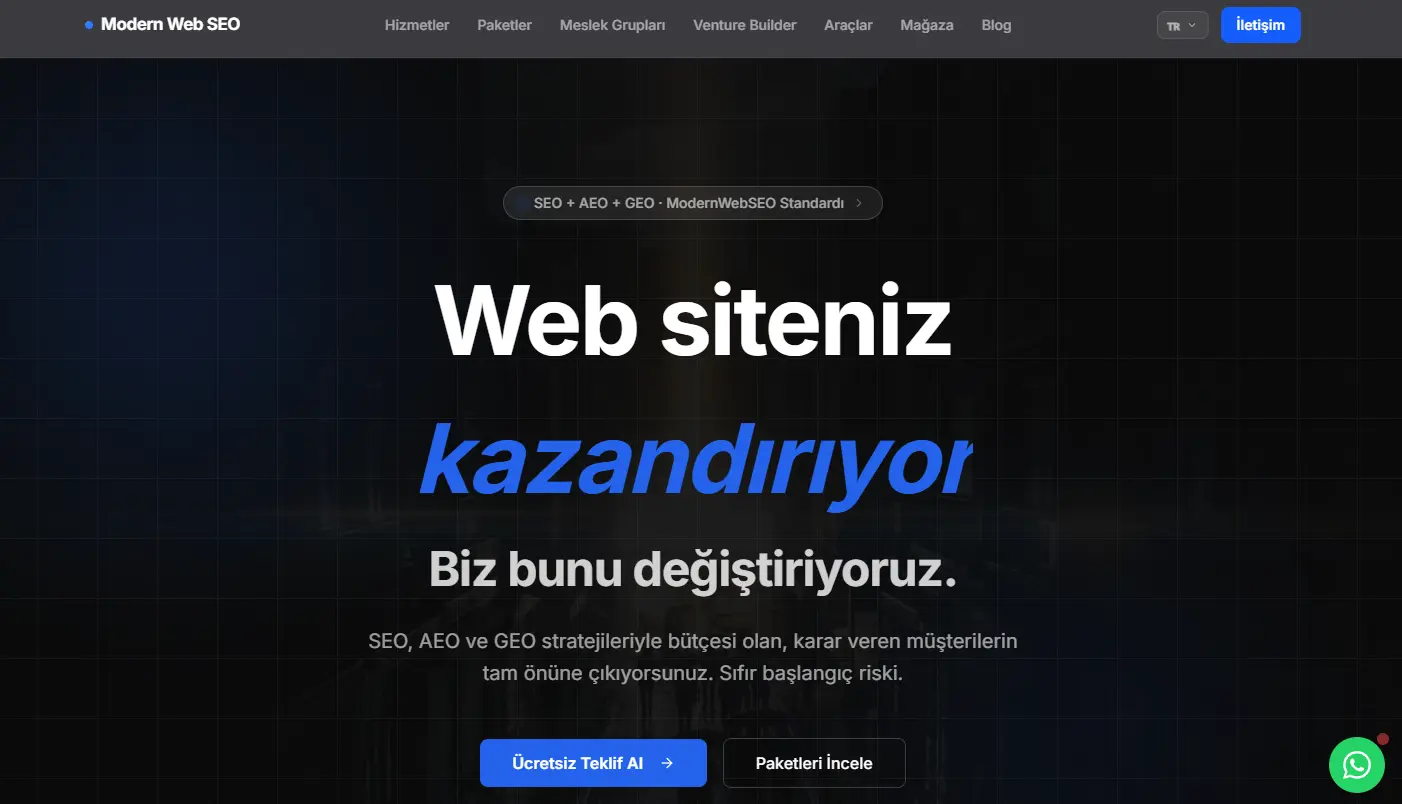
The Brief
- Goal
- Build a service brand that survives the AI Overview era by making the founder an auditable entity, not just a domain.
- Audience
- SMBs and solo builders who have seen organic traffic drop as AI Overviews absorb top-of-funnel queries.
- Niche
- GEO/AEO consulting at a transparent fixed price.
The Approach
Entity-first SEO: registered Wikidata entity Q138653257 before writing a single blog post.
11-platform entity stack: Wikidata, LinkedIn, X/Twitter, GitHub, Crunchbase, Product Hunt, Medium, Dev.to, Substack, Dribbble, IndieHackers.
Pricing transparency: $499 audit published on the homepage — no "contact for pricing."
GEO content strategy: pages structured to answer the exact questions AI models use for sourcing.
Tech Stack
Frontend
Next.js 14 App Router
Hosting
Vercel
Styling
Tailwind CSS
SEO
Schema.org structured data (Person, Organization, Service, BreadcrumbList)
Entity
Analytics
Privacy-first
The Build
The first decision was positioning. Most SEO freelancers compete on hourly rate or deliverable count, which creates a race to the bottom. Positioning ModernWebSEO as a Venture Builder studio — one that "builds and operates" instead of just "advises" — reframes the client relationship from vendor to strategic partner. The $499 fixed-price audit is a productized entry point, not the whole offer; it qualifies buyers before a single call happens.
The Wikidata strategy was the most distinctive part of the build. Getting the founder's entity registered at Q138653257 gave AI models a structured, verifiable anchor to cite when generating AI Overviews about SEO services in Istanbul and Turkey. Wikidata is one of the few publicly editable knowledge bases that major LLMs treat as a canonical source — having a record there is the difference between being cited and being invisible in AI-generated answers.
The $499 audit product was designed with self-qualification in mind. Transparent pricing on the homepage means only buyers who have already decided the price is acceptable book a call. This cuts discovery call time in half and improves close rate because there are no price objections mid-conversation. The audit deliverable itself — an AI-Readiness report covering entity coverage, structured data gaps, and GEO content opportunities — was scoped to be completable in four hours, making it sustainable at the price point.
The 11-platform entity stack was built as a knowledge graph, not a social media presence. Each platform — Wikidata, LinkedIn, X/Twitter, GitHub, Crunchbase, Product Hunt, Medium, Dev.to, Substack, Dribbble, and IndieHackers — is a node that reinforces entity recognition across different AI training datasets. The key is consistency: the same name, bio, and URL appear on every platform so that when AI models reconcile mentions, they converge on the same entity rather than splitting authority across similar-but-unmatched records.
Results
What I’d Do Differently
“I’d have launched the Wikidata entity on day one instead of month three. Entity recognition compounds over time — every week without it was a week the AI models couldn’t confidently cite the brand.”
“The service page copy tried to be too clever. Plain descriptions of deliverables outperform clever positioning hooks on pages designed for AI citation.”
Ready to become AI-citable?
Book an AI-Ready SEO Audit and find out exactly where your entity coverage has gaps.