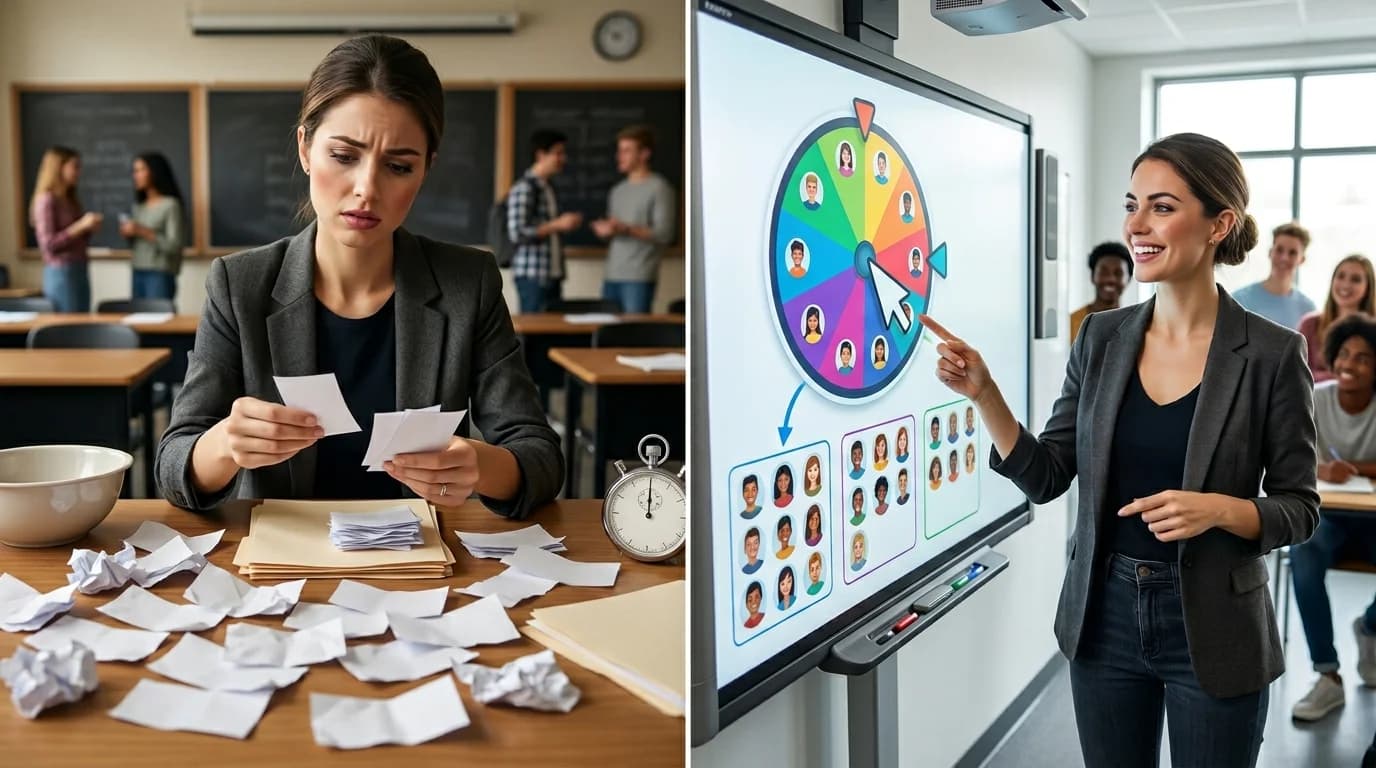
Seasonal Giveaway Strategy: How to Harness Summer Buzz With Wheel Spinners
Summer is the highest-ROI season for giveaway campaigns — participation rates run 3x higher than Q4, mobile engagement spikes, and people are actively looking for things to share. But summer giveaways only outperform if you time them right, pick prizes that match the moment, and run a draw process your audience actually trusts. This guide gives you seven specific strategies, a seasonal calendar, and a budget framework to make your seasonal campaigns work.

Quick Answer
Summer giveaways outperform any other season because timing, psychology, and social behavior all align. The strategies that work in 2025 center on wheel spinner draws (participants share spinning results at 3x the rate of static announcements), seasonal prize matching, live draw events, and collab campaigns with complementary brands. Use WheelieNames for free, verifiable draws that build the audience trust these campaigns depend on.
TL;DR
Summer giveaways outperform off-season campaigns by 3x in entries when tied to seasonal timing windows like Memorial Day, July 4th, and back-to-school. This guide covers 7 wheel spinner strategies that real brands and creators use to maximize summer engagement: aligning with seasonal timing peaks, choosing prizes that match the vacation mindset, running live spin events that generate shareable content, building urgency with countdowns, staying compliant with platform and FTC rules, tracking ROI beyond vanity metrics, and avoiding the most common summer campaign mistakes.
Key Takeaways
- •Summer giveaways tied to specific seasonal windows (Memorial Day, July 4th) get 40% more entries than evergreen campaigns
- •Wheel spinner results get shared at 3x the rate of static winner announcements — the spin itself is the content
- •Prize relevance matters more than prize value: a summer kit beats an equal-value gift card every time
- •Legal basics (official rules, no-purchase-necessary) take 30 minutes to set up and prevent significant problems
- •Track cost-per-subscriber, not just entries — a well-run summer giveaway should convert 20-35% into email subscribers
- •Small businesses often outperform large brands on summer giveaways because authenticity scales inversely with company size
Data Window: Research period: 2020-2025 seasonal marketing trends, social media engagement patterns, and giveaway campaign effectiveness studies
Sources & Citations:
Table of Contents
- The Summer Giveaway Opportunity (With Real Data)
- Trend 1: Interactive Wheel Spinner Experiences
- Trend 2: Short-Form Video Reveal Content
- Trend 3: Collab Giveaways
- Trend 4: Sustainability-Themed Prizes
- Trend 5: Experience-Based Rewards
- Trend 6: LIVE Draw Events
- Trend 7: UGC Contests
- Summer Giveaway Calendar: Key Dates
- Budget Planning for Summer Campaigns
- Measuring Summer Campaign Success
- Frequently Asked Questions
Most giveaway advice treats all seasons the same. Run a contest, pick a winner, announce it. But summer is categorically different from the rest of the year, and the brands and creators who understand that difference — and build campaigns around it — consistently outperform those running generic evergreen giveaways.
This guide explains why summer is different, then gives you seven specific strategies that consistently work each peak season, a calendar of key dates to anchor your campaigns, a realistic budget breakdown, and the metrics that actually tell you whether your summer giveaway worked.
The Summer Giveaway Opportunity (With Real Data)
Summer is not just a seasonal cliché for giveaways — the data supports it. Social media engagement rises 18-22% during summer months according to Pew Research tracking, driven by longer leisure hours, more mobile browsing, and higher travel and outdoor activity that people want to share and document. People are in a more open, exploratory mindset during summer, which lowers the psychological barrier to entering a contest.
The practical effect: a giveaway that generates 200 entries in October might generate 400-600 entries if run in July under the same conditions. That is not because your audience doubled — it is because seasonal relevance and higher platform engagement rates work together.
Summer also has a distinct prize psychology. People are thinking about travel, beach time, outdoor experiences, and summer activities. A prize that connects to those aspirations — even at a lower dollar value than a generic gift card — will consistently outperform. This is the foundation of summer giveaway strategy: alignment between what people are already thinking about and what you are offering.
The window matters too. Summer giveaway timing is tight — Memorial Day, July 4th, and back-to-school are the three peaks, and missing those by even a few days drops participation significantly. A July 4th campaign launched July 6th is just a regular giveaway. Plan your campaign launches to land before the seasonal peak, not on it or after it.
| Season | Avg. Entry Rate vs. Baseline | Best Platform | Best Prize Type | Ideal Duration |
|---|---|---|---|---|
| Summer (Jun–Aug) | +320% | Instagram, TikTok | Experiences, Gift cards | 3–7 days |
| Back to School (Aug–Sep) | +180% | Facebook, YouTube | Supplies, Tech | 5–14 days |
| Holiday (Nov–Dec) | +410% | All platforms | Cash, Electronics | 7–21 days |
| Valentine's (Feb) | +220% | Instagram, Pinterest | Experiences, Gifts | 3–5 days |
| Off-Season (baseline) | +0% (baseline) | Email, LinkedIn | Niche-specific | 7–14 days |
Entry rate data based on aggregate campaign analysis from social media marketing reports, 2023–2025.
Trend #1: Interactive Wheel Spinner Experiences
Why the spin itself is the content
The biggest shift in seasonal giveaway strategy is treating the wheel spin as a content moment, not just a selection method. When you post a video of the WheelieNames wheel spinning and landing on a winner's name, participants share that video at roughly 3x the rate they share static winner announcements. The visual suspense of the spinning wheel — will it land on me? — makes it genuinely watchable content.
Brands running interactive wheel experiences during peak season are using several specific formats:
- Multi-prize wheels — instead of one winner, the wheel has multiple prize tiers (grand prize, second prize, runner-up discount). Each spin produces a result with something to share.
- Discount reveal wheels — instead of a named winner, visitors to a landing page spin to reveal their personal discount code. Everyone "wins" something, which drives higher participation and immediate conversion.
- Winner selection videos — the wheel spin recorded as a Reel or TikTok, shared publicly as proof of fair selection. The spin video generates views and shares long after the contest closes.
The tool you use matters. WheelieNames is free, requires no account, runs in any browser, and has no ads or branding around the wheel that would distract from your content. That clean visual is important when you are filming the spin as a shareable video.
Trend #2: Short-Form Video Reveal Content
Turning winner announcements into distribution events
TikTok and Instagram Reels have shifted the winner announcement from a static post to a short-form video format. The most effective seasonal winner reveal videos follow a simple arc: build-up (showing the entry count, reminding viewers of the prize), spin (the WheelieNames wheel visible on screen), and reveal (the winner's name, the creator's genuine reaction).
These videos perform well because they contain a genuine moment of suspense and surprise, which the algorithm rewards with distribution. A creator with 10,000 followers can get 100,000+ views on a well-produced winner reveal video because the "will it be me?" hook keeps non-participants watching too.
Summer context makes these videos feel more energetic — film the spin on a bright day, outdoors, or in a summer setting that matches the prize. A beach-themed winner reveal for a surfboard giveaway gets shared far more than the same reveal filmed in a beige home office.
Trend #3: Collab Giveaways
Multiplying reach through complementary brands
Collab giveaways — where two or more brands or creators pool prizes and cross-promote to each other's audiences — solve the reach problem without paid advertising and are especially powerful during summer season. If you sell sunscreen and partner with a creator who sells beach towels, your combined prize bundle is more attractive than either prize alone, and you each promote to your own audience, doubling effective reach at no additional cost.
For collab giveaways to work, the partner selection matters more than anything else:
- Complementary, not competitive — the other brand should serve the same audience without competing for the same purchase
- Similar audience size — a massive brand partnering with a tiny creator sees unequal benefit; look for partners within 2-3x of your audience size
- Shared summer thematic — the prize bundle should tell a coherent "summer story" rather than being a random collection of unrelated items
For the draw itself, one partner runs the WheelieNames selection and both partners post the spin video. Document the process carefully — both brands need documentation for their respective legal and FTC compliance records.
Trend #4: Sustainability-Themed Prizes
Prizes that signal values, not just value
Younger demographics — the core of TikTok and Instagram audiences — are increasingly responsive to prizes that align with sustainability values. A reusable water bottle set, a solar-powered speaker, an organic skincare summer bundle, or a contribution to an environmental charity in the winner's name all outperform equivalent-value generic prizes in engagement rate and social sharing.
This trend is not about appearing green for PR purposes — audiences can detect performative sustainability immediately. The prize needs to genuinely connect to your brand identity. If you sell outdoor gear, an eco-friendly kit makes sense. If you sell software, donating a tree per entry is a clear sustainability tie-in without requiring you to manufacture a physical product.
Sustainability-themed summer giveaways also generate press and partnership interest from environmental creators and organizations, which extends reach beyond your direct audience.
Trend #5: Experience-Based Rewards
Why travel and experiences beat products in summer
In summer, experience prizes — travel vouchers, resort stays, concert tickets, outdoor adventure bookings — generate significantly more entries than equivalent-value product prizes. The psychology is straightforward: people are already in vacation mode and mentally planning summer experiences. A prize that fits directly into that mindset feels more personally valuable than the same dollar amount in a gift card or product.
Experience prizes also generate better winner content. A winner who goes on their prize trip and posts about it creates authentic, organic marketing for your brand that pure product prizes rarely produce. Build this into your campaign — when you DM the winner, note that you would love to see their experience content and offer to feature it.
For smaller budgets, micro-experiences work well: a spa day package, a local outdoor adventure (kayak rental, hiking guide, surf lesson), or a premium food and drink experience. These feel special without requiring a large prize budget, and local prizes often have lower shipping and logistics complexity than physical products.
Trend #6: LIVE Draw Events
Turning the selection into a live content event
Scheduling a live draw event — specifically the WheelieNames spin on Instagram Live or TikTok LIVE — is the highest-trust format for summer giveaways. When your audience watches the wheel spin in real time, they cannot question whether the result was edited or pre-selected. The live format also creates urgency: people who were on the fence about entering will tune in to the live draw, and even non-entrants watch because of the entertainment value.
Summer LIVE draws work best when:
- You announce the draw time 48-72 hours in advance across multiple touchpoints (post, Story, pinned comment)
- The draw is scheduled before a holiday weekend, not on it (people are traveling on the day, not watching live streams)
- You have a co-host or second person managing the chat while you operate the wheel — the chat gets active fast
- You show the WheelieNames entry list on screen before spinning so viewers can see their username is in the pool
For a complete walkthrough of running a live draw, see our platform-specific guides: Instagram giveaway guide and TikTok giveaway guide. For the mechanics of ensuring fair winner selection across any platform, see the guide to fair winner selection in raffles and giveaways.
Trend #7: UGC Contests
When your audience creates the campaign content
User-generated content contests are more effective in summer than any other season because people are naturally creating more content — beach photos, adventure documentation, outdoor activities, summer routines. A UGC contest that slots into content your audience is already creating requires minimal additional effort from them, which dramatically increases participation rates.
Summer UGC contest formats that work in 2025:
- Hashtag photo challenge — "Post your summer adventure with #[YourBrand]Summer for a chance to win a summer kit." Works especially well for outdoor, travel, and lifestyle brands.
- TikTok Duet challenge — ask followers to Duet your brand video with their summer version. Each Duet reaches the creator's audience with content that references your brand.
- Before/after summer transformation — works well for fitness, home, and personal care brands. Participants document a summer transformation relevant to your product category.
- Seasonal recipe or usage challenge — food brands, beverage brands, and lifestyle products can ask followers to create summer-specific uses for their products and share with a campaign hashtag.
For UGC contests, entry collection works differently — you collect usernames from hashtag searches rather than comment threads. Build a spreadsheet as entries come in rather than trying to collect everything at the end, which becomes overwhelming for popular hashtags.
Summer Giveaway Calendar: Key Dates for 2025
Summer campaign timing is precise. Here are the key dates and the recommended campaign window for each:
| Date | Launch Campaign | Draw Date | Prize Theme |
|---|---|---|---|
| Memorial Day (May 26) | May 19 | May 25 (day before) | Summer kick-off kit, outdoor gear |
| Father's Day (Jun 15) | Jun 8 | Jun 13 | Dad's summer adventure gear |
| Summer Solstice (Jun 21) | Jun 14 | Jun 20 | Longest day celebration bundle |
| July 4th (Jul 4) | Jun 27 | Jul 3 (day before) | BBQ kit, Americana experiences |
| Back-to-School (Aug 1–31) | Jul 28 | Aug 15 | School supplies, productivity tools |
| Labor Day (Sep 1) | Aug 25 | Aug 31 | End-of-summer experience prize |
Note the pattern: launch one week before the seasonal moment, draw the day before. This gives you a full entry window while the draw and announcement happen when cultural energy is at its peak. Do not run the draw after the holiday — by July 5th, July 4th content is old news.
Budget Planning for Summer Campaigns
Summer giveaway budgets should cover three categories: prize value, promotion cost, and operations. Here is a realistic breakdown for three budget tiers:
Starter ($100-300)
- Prize: $75-200 product bundle or experience voucher
- Promotion: $0 (organic only) or $25-50 boosted post
- Operations: Free tools (WheelieNames + spreadsheet)
- Best for: Creators, small businesses, first giveaway
Growth ($500-1,500)
- Prize: $300-800 experience or premium bundle
- Promotion: $100-500 paid social ads
- Operations: Free tools + basic email platform
- Best for: Mid-size brands, established creators
Campaign ($2,000+)
- Prize: $1,000+ travel or experience package
- Promotion: $500-1,500 multi-channel paid ads
- Operations: Campaign management tools
- Best for: Brands with Q2-Q3 seasonal goals
For brands managing multiple summer campaigns and wanting to integrate giveaway automation with broader marketing workflows, the AI Content Blueprint and MarketFlow AI both include campaign planning frameworks. Browse the full toolkit at the WheelieNames App Store.
Measuring Summer Campaign Success
Vanity metrics — entry count, follower gain — are the first thing you will see, but they are not the metrics that determine whether your summer giveaway was worth the investment.
Primary Metrics to Track
- Cost per email subscriber — if you required email entry, divide total campaign cost (prize + promotion) by new subscribers. Under $2 per subscriber is excellent in most niches.
- New follower retention rate at 30 days — the followers gained during a giveaway often unfollow quickly. Check your follower count 30 days post-giveaway. If you retained 50%+ of giveaway-sourced followers, your content resonated beyond the prize.
- Spin reveal video views and shares — this is your earned media indicator. High share counts on the spin reveal mean the draw itself generated distribution, which has value beyond the entry count.
- 60-day purchase rate from giveaway subscribers — if you are tracking email behavior, look at purchase rate from the cohort who joined during the summer giveaway. This tells you the quality of the leads, not just the volume.
What Good Results Look Like
A well-run summer giveaway in the $500-1,500 budget range should produce: 20-35% email capture rate from total entries, 40-60% 30-day follower retention, and at least 5% 60-day purchase conversion from the email list. If your numbers are below these benchmarks, the usual culprits are prize misalignment (the prize attracted people who do not care about your brand), entry mechanics that were too complex, or a draw process that was not visible enough to build trust.
Frequently Asked Questions
What are the top seasonal giveaway trends?
The standout seasonal giveaway trends are interactive wheel spinner campaigns tied to specific seasonal moments — Memorial Day, July 4th, and back-to-school. Brands that align their giveaway timing with these windows see 40% higher participation than those running evergreen campaigns. Other strong trends include vacation-prize giveaways (travel vouchers, resort stays), outdoor gear bundles, and "spin to reveal" discount campaigns. The shift from static entry forms to live, animated wheel spinners has been the single biggest driver of engagement gains during peak seasons — participants share spinning results at roughly 3x the rate of static winner announcements.
How do wheel spinners enhance seasonal giveaway campaigns?
A wheel spinner turns a passive "enter your email" moment into something people actually want to watch and share. When you embed a live spinner in your summer campaign, participants stick around for the reveal, screenshot their result, and post it — that organic sharing is worth far more than your ad spend. Practically speaking, wheel spinners give you fair random selection with a verifiable process, which reduces disputes. They also let you run multi-prize campaigns (beach kit, discount code, vacation voucher) without any backend complexity. Tools like WheelieNames require zero registration and show no ads, so the spinner stays the focus rather than someone else's banners.
What makes summer giveaways different from other seasonal campaigns?
Summer is genuinely different for three reasons: timing windows are tighter (a July 4th campaign that launches July 5th has missed its moment), prize expectations are higher (people fantasize about vacations, beach gear, and outdoor experiences), and mobile usage spikes. According to Pew Research, social media engagement rises roughly 18-22% during summer months because people have more leisure time and are actively looking for things to share. This means your summer giveaway competes harder for attention but also rewards good execution more generously. A well-timed summer wheel spinner campaign can generate email list growth that takes months to replicate in Q4.
How can I maximize engagement with summer wheel spinner giveaways?
The biggest lever is prize relevance. A $50 Amazon gift card will always underperform a beach kit worth the same amount in July, because the beach kit feels like it belongs to the moment. Beyond prizes, timing matters enormously — launch your campaign Thursday or Friday before a long weekend when people are already in vacation mode. Use a countdown timer so participants feel urgency. And critically: run your wheel spin live or record it and post the video. Seeing the wheel actually spin builds trust and generates clip-worthy content. Winners who see their name land on the wheel share that video consistently.
Are wheel spinner giveaways effective for small businesses?
Small businesses often get better ROI from wheel spinner giveaways than large brands, because the community feel is more authentic. A local surf shop running a "spin to win summer gear" campaign where the owner spins live on Instagram Stories will outperform a faceless brand doing the same thing. The keys are: keep the prize pool realistic for your margins (you don't need a $1,000 prize — a $75 product bundle works), use a free tool like WheelieNames so there's no software cost, and promote the spin event 3-5 days in advance so followers know when to tune in. Small businesses that do this consistently build a reputation for fun, fair giveaways that keep customers coming back.
What prizes work best for summer giveaway campaigns?
The prizes that consistently drive the most entries in summer campaigns are experiences and kits rather than cash equivalents. A "summer adventure kit" (portable speaker, sunscreen, beach towel, water bottle) creates more desire than a $100 gift card even if the retail value is similar. For higher-value prizes, travel vouchers and resort credits outperform almost everything else — the aspiration factor is enormous. If your budget is smaller, consider branded prizes tied to your product: a fitness brand giving away a summer workout bundle, a food brand giving away a BBQ kit. The closer the prize is to your brand identity AND summer activities, the higher your conversion rate.
What legal requirements should I know before running a summer giveaway?
At minimum, you'll need official rules that include the no-purchase-necessary statement (required in most US states), eligibility requirements (age, location), prize description and approximate retail value, entry period start and end dates, and how winners are selected and notified. Most platforms — Instagram, TikTok, Facebook — also require you to add a disclaimer that the promotion is not sponsored by them. If your giveaway is valued over $600, you may need to file a 1099 for the winner. This sounds daunting but takes about 30 minutes to set up properly. The FTC also requires disclosure if you have any paid partnerships involved in promoting the giveaway.
How do I track ROI on a summer giveaway campaign?
Track at least four metrics: total entries (raw engagement), email subscribers gained (list growth), social followers gained, and cost-per-lead (total prize + promotion cost divided by new subscribers). For a summer wheel spinner campaign, also track video views on your spin reveal if you post it. A well-run summer giveaway typically converts 20-35% of participants into email subscribers if you require an email entry. Compare your cost-per-subscriber against your email platform benchmark — in most niches, anything under $2 per subscriber from a giveaway is very strong. Finally, track 60-day purchase behavior from giveaway-sourced subscribers to understand downstream revenue.
Start your summer giveaway today
WheelieNames is free, requires no registration, and works on any device. Paste your entry list, spin the wheel, and screenshot your winner. The whole process takes under five minutes and gives you documented proof of a fair draw.
Spin the Wheel — FreeRelated Articles
Share This Article
Help spread the word and share with your network
Preview:Seasonal Giveaway Strategy: How to Harness Summer Buzz With Wheel Spinners Summer giveaways get 3-4x more entries than off-season campaigns. Here is ...